
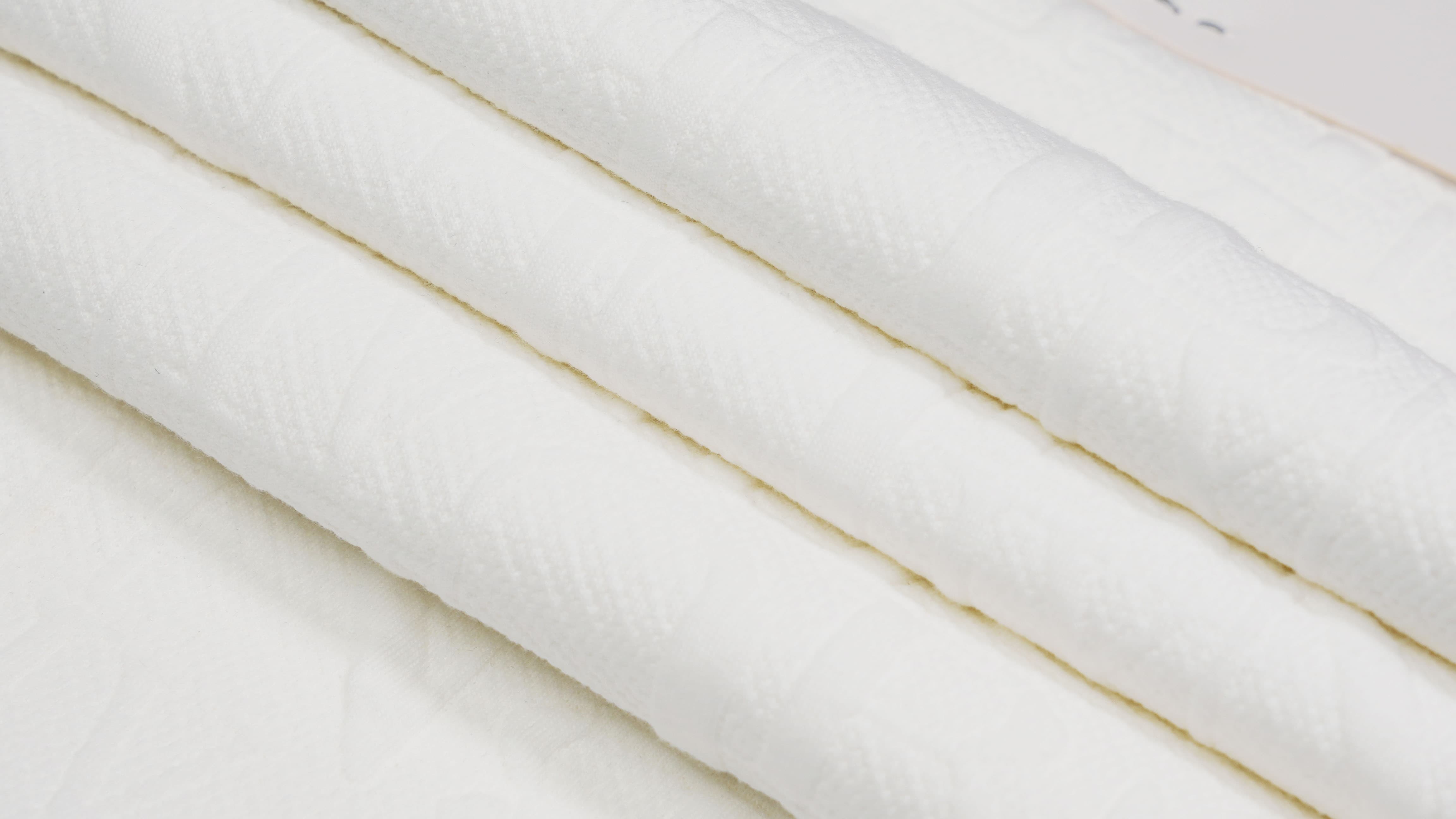
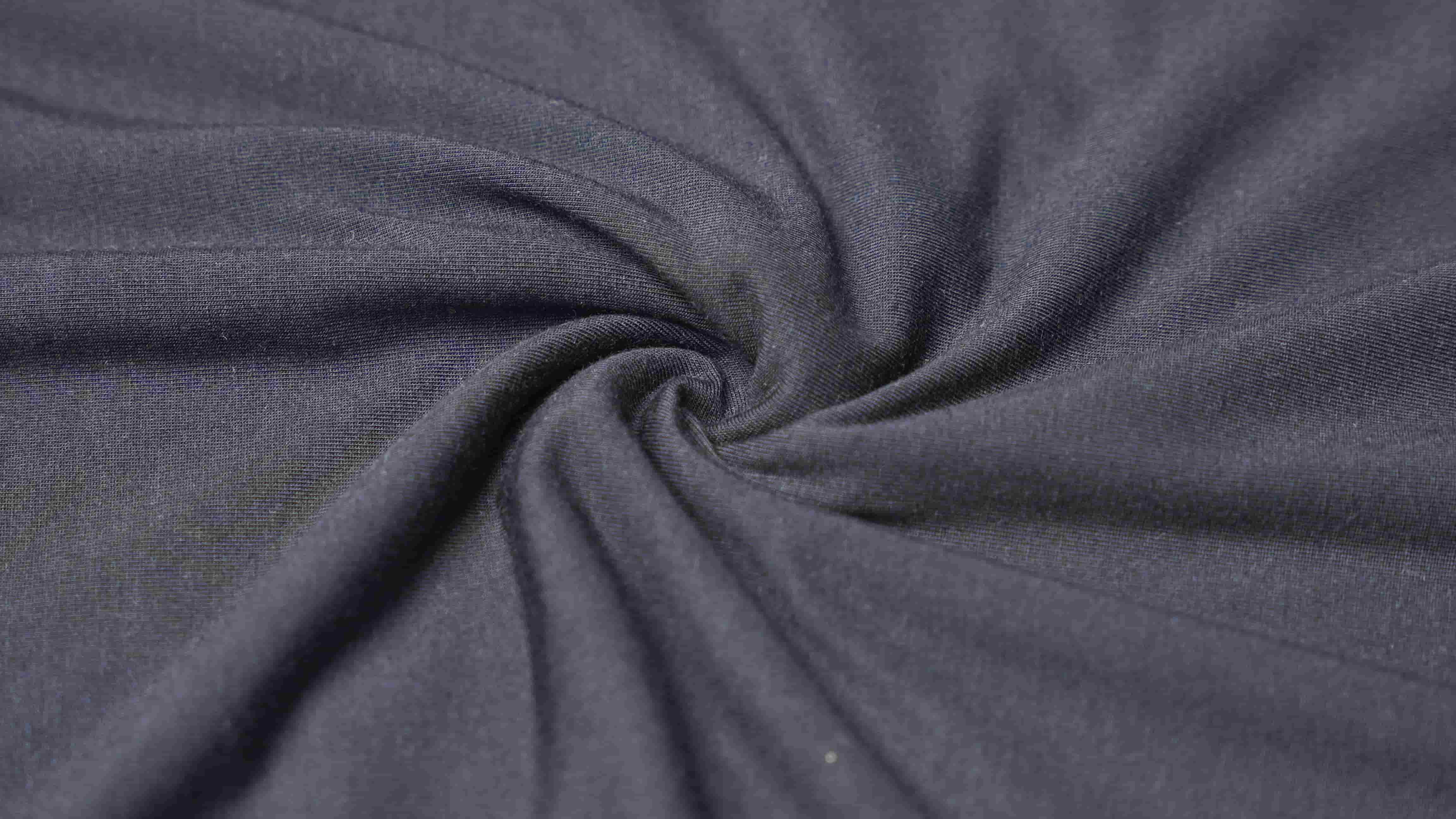
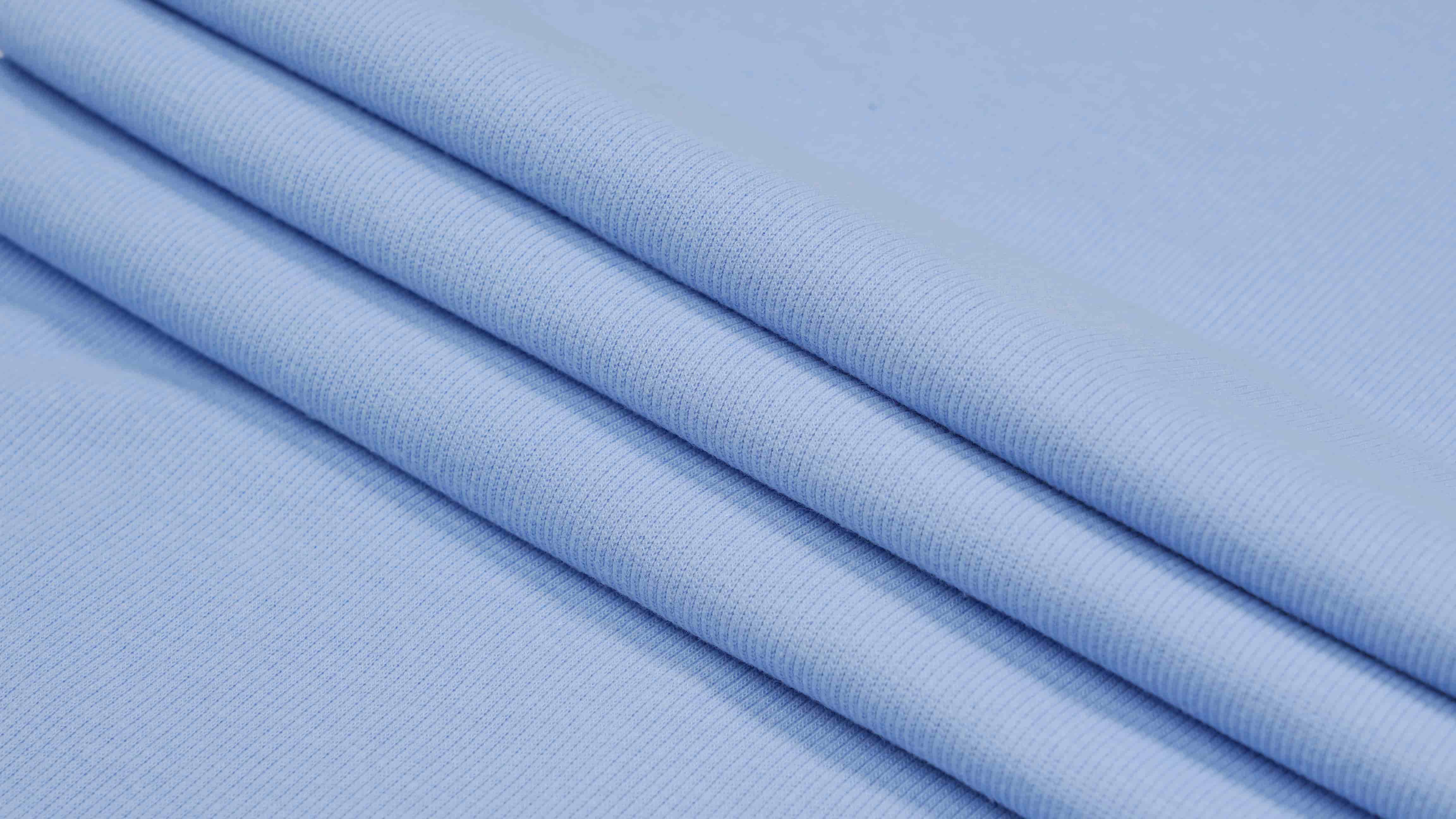
Blended knit fabric engineered with long-staple cotton, polyester, and vortex-spun yarn can offer better resistance to pilling and repeated laundering than some conventional cotton or blended knits. Pilling is influenced by fiber length, yarn hairiness, fiber composition, and fabric construction, so controlling these factors during yarn and fabric production can improve surface durability and appearance retention over time.
What Actually Causes Pilling in Knit Fabrics?
Before considering ways to reduce pilling, it helps to understand how it develops. Pilling is primarily a mechanical response to repeated friction rather than a simple indicator of fabric quality. During wear and laundering, loose or protruding fibers can migrate to the fabric surface, where they become entangled and form small fiber clusters known as pills.
The Short-Staple Problem
Pure cotton fabrics made with shorter fibers can be more prone to surface hairiness because they contain a higher proportion of fiber ends that may protrude from the yarn. Repeated rubbing during wear and washing can loosen these fibers, allowing them to tangle and form pills. Fiber length is therefore one of several factors that can influence pilling performance, along with yarn construction, twist, fabric structure, and finishing.
Why Knits Are More Vulnerable Than Wovens
Knitted fabrics are formed from interconnected loops, which give them flexibility, stretch, and a soft hand. This looped construction can also allow more movement at the fabric surface during repeated wear and laundering. As the fabric rubs against itself, other garments, or external surfaces, loose fibers may be drawn out and become entangled. The extent of pilling depends on the fiber, yarn, fabric construction, and finishing process rather than the knit structure alone.
The Blended Fabric Advantage
Blended knit fabric can be engineered to manage these factors through a combination of fiber selection and yarn construction. Blending long-staple cotton with polyester can reduce the number of exposed fiber ends while adding abrasion resistance to the yarn. When combined with a low-hairiness spinning method such as vortex spinning, the resulting yarn can provide a more stable surface and help reduce fiber migration during repeated use and laundering. Actual pilling resistance, however, should be evaluated through standardized testing of the finished fabric.
How Vortex Spinning Technology Reduces Pilling at the Yarn Level
Not all blended knit fabric performs the same way. Fiber composition is important, but the spinning method also influences yarn hairiness, surface stability, and ultimately pilling performance.
What Vortex Spinning Does Differently
Vortex spinning uses a high-speed air vortex to form and wrap fibers around the yarn core, producing a yarn structure with relatively low surface hairiness. The technology was developed by Murata Machinery and is designed to control the arrangement of fibers during spinning. Compared with conventional spinning methods, vortex-spun yarn can offer advantages in hairiness control and resistance to surface fuzz formation, although the final pilling performance also depends on fiber properties, yarn parameters, knitting, and finishing.
The Hairiness Factor
Yarn hairiness is an important factor in pilling because protruding fibers can be pulled from the yarn surface and become entangled during repeated friction. Vortex spinning helps incorporate more surface fibers into the yarn structure, reducing the number of loose fibers available to form pills. This can contribute to improved pilling resistance, particularly when combined with suitable fiber selection and fabric construction.
Pilling performance should be confirmed through testing of the finished fabric rather than attributed to the spinning method alone. Test results can vary with fiber composition, yarn count, knit structure, finishing, and laundering conditions, so methods such as ICI pilling or other standardized evaluations are most useful when the test conditions are clearly specified.
From Yarn to Fabric: The Design Park BD Approach
Design Park BD’s Everyday Skin-Friendly Blended Knit Fabric combines long-staple cotton and polyester with vortex-spun yarn. Available yarn counts include 16’S, 21’S, 32’S, and 40’S, with options for single jersey, double jersey, and terry knit structures. This combination allows fiber selection, yarn construction, and fabric structure to be considered together when developing a knit fabric with controlled surface hairiness and pilling performance.
Does Blended Knit Fabric Stay Soft After Washing?
Pilling resistance and softness are related to fabric durability, but they are not the same performance characteristic. A blended knit fabric may retain a more consistent surface feel after repeated laundering when the fiber blend, yarn construction, and finishing process are properly selected.
The Cotton Softness Trade-Off
Cotton is valued for its soft hand and comfortable feel, but the surface characteristics of a cotton knit can change with repeated wear and laundering. Fiber length, yarn construction, finishing, and washing conditions all influence how much the surface changes over time. Shorter fibers can contribute to greater surface hairiness and may be more likely to migrate or become entangled under repeated friction.
Why Polyester Can Help Maintain Fabric Performance
Polyester generally offers good abrasion resistance and dimensional stability, which can support the durability of a cotton-polyester knit. In a blended knit fabric, polyester can complement cotton by improving resistance to mechanical wear and helping the fabric maintain its structure during repeated use and laundering. The resulting hand feel, however, depends on the polyester type, fiber fineness, blend ratio, yarn construction, and finishing process rather than polyester content alone.
The Skin-Friendly Difference
Design Park BD’s fabric is developed for apparel and other applications where a soft hand and comfortable surface are important. The combination of long-staple cotton and vortex-spun yarn is intended to create a smoother yarn surface, while the choice of polyester fiber can be adjusted to influence the fabric’s hand feel and performance.
For garments worn directly against the body, factors such as fiber selection, fabric construction, finishing, and laundering performance should be evaluated together. A sample and side-by-side wear or wash test can provide a more reliable assessment of softness and comfort for a specific application.
What Happens After 50 Washes? A Durability Breakdown
How does blended knit fabric perform under repeated laundering? The answer depends on fiber composition, yarn construction, knit structure, finishing, and the washing conditions used. Rather than judging durability by a fixed number of wash cycles, these factors should be evaluated together through controlled laundering and fabric performance testing.
Wash Cycle Lifespan
Repeated washing can gradually change the surface appearance, dimensions, and hand feel of a cotton knit. Fabrics made with shorter fibers may develop more surface hairiness and pilling as loose fibers are exposed to repeated mechanical action. Shrinkage and shape changes can also occur depending on the fiber, fabric construction, finishing process, and laundering conditions.
A blended knit fabric containing polyester can offer advantages in dimensional stability and resistance to mechanical wear. Vortex-spun yarn can also help control surface hairiness, while the finished fabric’s actual performance depends on the complete yarn and knitting process. Claims about lint shedding, shrinkage, skew, or appearance retention should therefore be supported by comparative laundering tests using the same wash and drying conditions.
Color Fastness and Appearance Retention
Color retention after laundering depends on the fiber composition, dye class, dyeing process, finishing, and care conditions. Instead of applying a fixed colorfastness rating to all cotton-polyester knits, manufacturers should evaluate the finished fabric using an appropriate standardized washing fastness test and report the test method and rating.
Appearance retention is similarly influenced by more than color alone. Pilling, dimensional change, surface hairiness, fabric skew, and shade change can all affect how a blended knit fabric looks after repeated laundering. A controlled wash test provides more useful evidence than a general claim about the number of cycles a fabric can withstand.
Real-World Wear Scenarios
The following comparison provides a practical framework for evaluating cotton-polyester and 100% cotton knits. Actual results will vary according to fiber quality, blend ratio, yarn count, knit structure, finishing, and laundering conditions.
| Performance Metric | Blended Knit Fabric (Cotton/Polyester) | 100% Cotton Knit |
|---|---|---|
| Pilling resistance | Can be improved through fiber and yarn selection | Depends strongly on fiber length and yarn construction |
| Wash durability | Depends on construction and test conditions | Depends on construction and test conditions |
| Shape retention after washing | Polyester can support dimensional stability | More sensitive to shrinkage and shape change |
| Colorfastness | Depends on fiber, dyeing, and finishing | Depends on fiber, dyeing, and finishing |
| Softness over time | Influenced by blend, yarn, and finishing | Influenced by fiber length, yarn, and finishing |
| Lint shedding | Can be reduced through yarn construction and finishing | Depends on fiber and yarn construction |
| Drying behavior | Polyester content can shorten drying time | Generally retains more moisture |
The key is not a fixed wash-cycle number but how the finished blended knit fabric performs under the laundering conditions required for its intended application. For product development or bulk sourcing, side-by-side wash testing can provide a more reliable basis for comparing pilling, dimensional stability, colorfastness, and surface appearance.
Three Real-World Scenarios Where Blended Knit Fabric Excels
Durability testing provides useful performance data, but the right fabric also depends on how and where it will be used. Blended knit fabric can be a practical option for garments and textile products that require a balance of comfort, appearance retention, and resistance to repeated wear and laundering.
Scenario 1: The Daily Commuter’s T-Shirt
T-shirts worn frequently are exposed to repeated washing, friction from outerwear, bags, and daily movement. A cotton-polyester blended knit fabric can help balance softness with resistance to mechanical wear. Long-staple cotton contributes to a smoother hand, while polyester can support dimensional stability and abrasion resistance. When combined with vortex-spun yarn, the fabric can also be engineered for lower surface hairiness and improved pilling performance.
For everyday T-shirts, factors such as blend ratio, yarn count, GSM, and single-jersey construction should be matched to the desired hand feel and durability.
Scenario 2: The Family Wardrobe
Children’s clothing often faces frequent laundering, stains, and repeated friction during everyday activities. For these applications, a cotton-polyester blended knit fabric can provide a balance between a cotton-rich hand feel and the durability associated with polyester.
A 60/40 or 70/30 cotton-polyester blend may be considered when softness and breathability are priorities, while other ratios can be selected when faster drying or greater resistance to mechanical wear is more important. The final choice should also consider fabric weight, yarn construction, finishing, and the intended care conditions.
Scenario 3: The Loungewear Set That Actually Lasts
Loungewear, hoodies, bathrobes, and similar products require more than basic durability; fabric hand feel and surface comfort are also important. Blended knit fabric made in double jersey can provide a more substantial structure for hoodies and coordinated sets, while terry knit offers a looped surface suited to products such as robes and lightweight blankets.
For these applications, the polyester content can contribute to wear resistance and dimensional stability, while cotton helps maintain a familiar natural hand feel. Selecting the appropriate knit structure, yarn count, GSM, and finishing process is key to achieving the intended combination of softness, weight, and performance.
Breaking Down the Blend: Which Ratio Is Right for You?
Not all blended knit fabric is the same. The cotton-to-polyester ratio can influence hand feel, breathability, drying behavior, durability, and dimensional stability, making blend selection an important part of fabric development.
Common Blend Ratios and What They Mean
Design Park BD offers commonly used compositions including 50% cotton / 50% polyester, 60% cotton / 40% polyester, and 70% cotton / 30% polyester. Each ratio provides a different balance of properties and can be matched to the intended application.
- 70/30 (Cotton/Polyester): A cotton-rich option that prioritizes a softer, more natural hand feel while retaining some of polyester’s durability and dimensional stability. It can be suitable for T-shirts and other garments where cotton comfort is a priority.
- 60/40: Provides a more balanced combination of cotton hand feel and polyester performance. It can be considered for everyday garments, hoodies, coordinated sets, and other applications requiring a versatile fabric.
- 50/50: Places greater emphasis on polyester-related properties such as durability and drying performance while retaining cotton in the blend. It can be suitable for activewear, workwear, or garments exposed to frequent laundering.
The Complementary Performance Principle
The value of cotton-polyester blended knit fabric comes from combining the different characteristics of two fiber types. Cotton contributes a familiar natural hand feel and moisture absorption, while polyester can provide abrasion resistance, dimensional stability, and faster drying. The resulting performance depends on the blend ratio as well as fiber specifications, yarn construction, knit structure, and finishing.
For fabric developers and buyers, there is no single ratio that works for every application. The appropriate composition should be selected according to the required hand feel, weight, drying behavior, durability, care conditions, and target end use.
Here’s a comparison of the three blend ratios across key performance attributes:
| Blend Ratio | Softness | Breathability | Durability | Pilling Resistance | Drying Speed | Best Use Case |
|---|---|---|---|---|---|---|
| 70/30 Cotton/Polyester | ★★★★★ | ★★★★★ | ★★★☆☆ | ★★★★☆ | ★★★☆☆ | Premium T-shirts |
| 60/40 Cotton/Polyester | ★★★★☆ | ★★★★☆ | ★★★★☆ | ★★★★☆ | ★★★★☆ | Everyday wear, hoodies |
| 50/50 Cotton/Polyester | ★★★☆☆ | ★★★☆☆ | ★★★★★ | ★★★★★ | ★★★★★ | Activewear, frequent-wash items |
The right ratio depends on your priorities. But across all ratios, the vortex-spun construction ensures better pilling resistance than conventionally spun blends.
The Verdict: Can Blended Knit Fabric Survive Daily Washing Without Pilling?
Blended knit fabric can be engineered for better resistance to pilling and repeated laundering when the right fiber, yarn, and fabric construction are selected. Long-staple cotton can help reduce surface hairiness, vortex spinning can improve yarn hairiness control, and polyester can contribute abrasion resistance and dimensional stability. Together, these factors can support a more durable and consistent fabric surface, although actual performance should be confirmed through testing of the finished fabric under the intended care conditions.
For T-shirts, hoodies, loungewear, and other frequently used knit products, the right blend ratio, yarn count, knit structure, and finishing process can make a practical difference in long-term fabric performance.
Choose the Right Blended Knit Fabric for Your Application
Design Park BD offers blended knit fabric made with long-staple cotton and polyester, with vortex-spun yarn options, multiple blend ratios, yarn counts, and knit structures. If you are sourcing fabric for T-shirts, hoodies, loungewear, or spa textiles, contact Design Park BD to discuss your specifications and request samples for side-by-side evaluation of pilling resistance, hand feel, and laundering performance.