
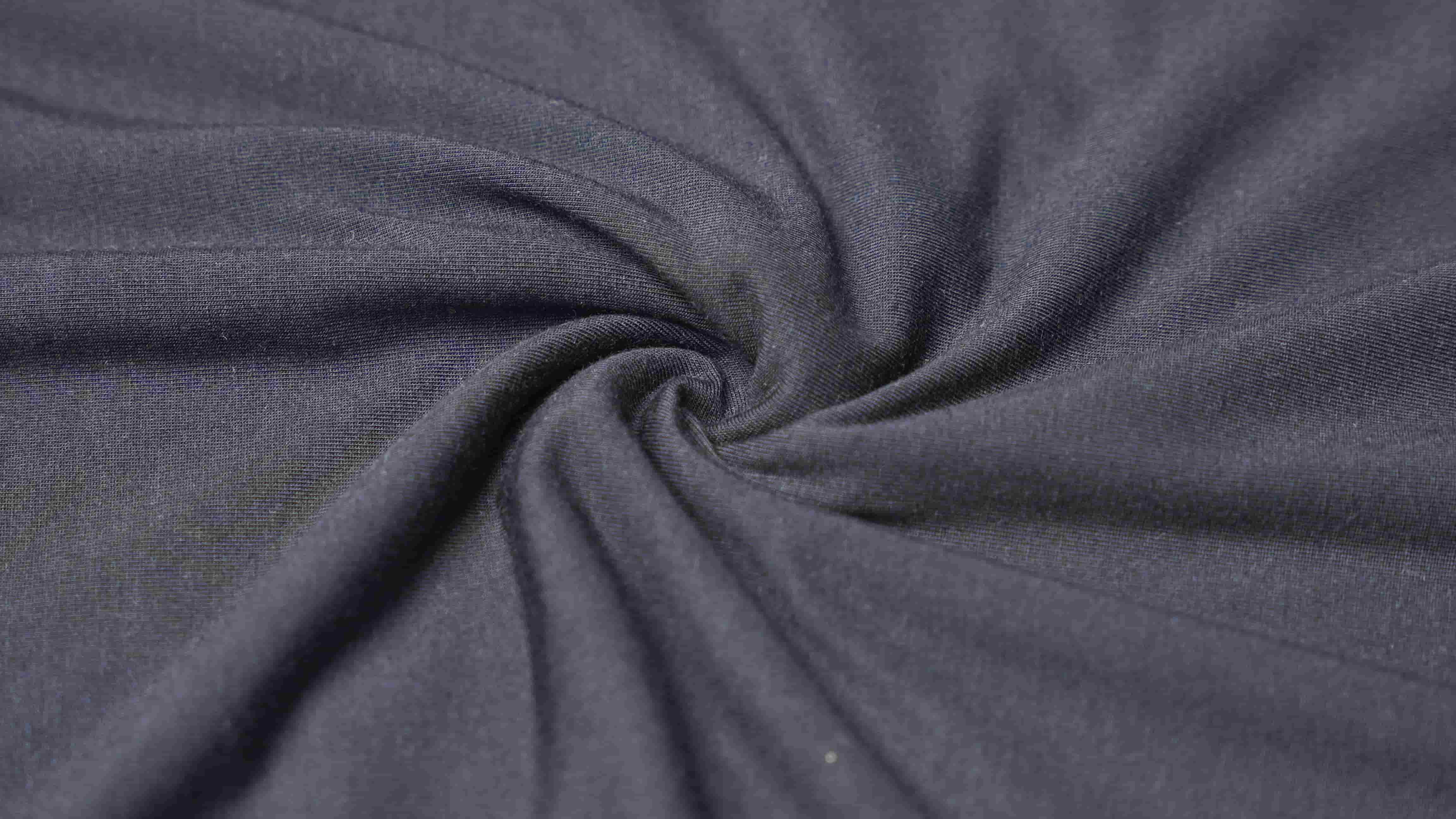
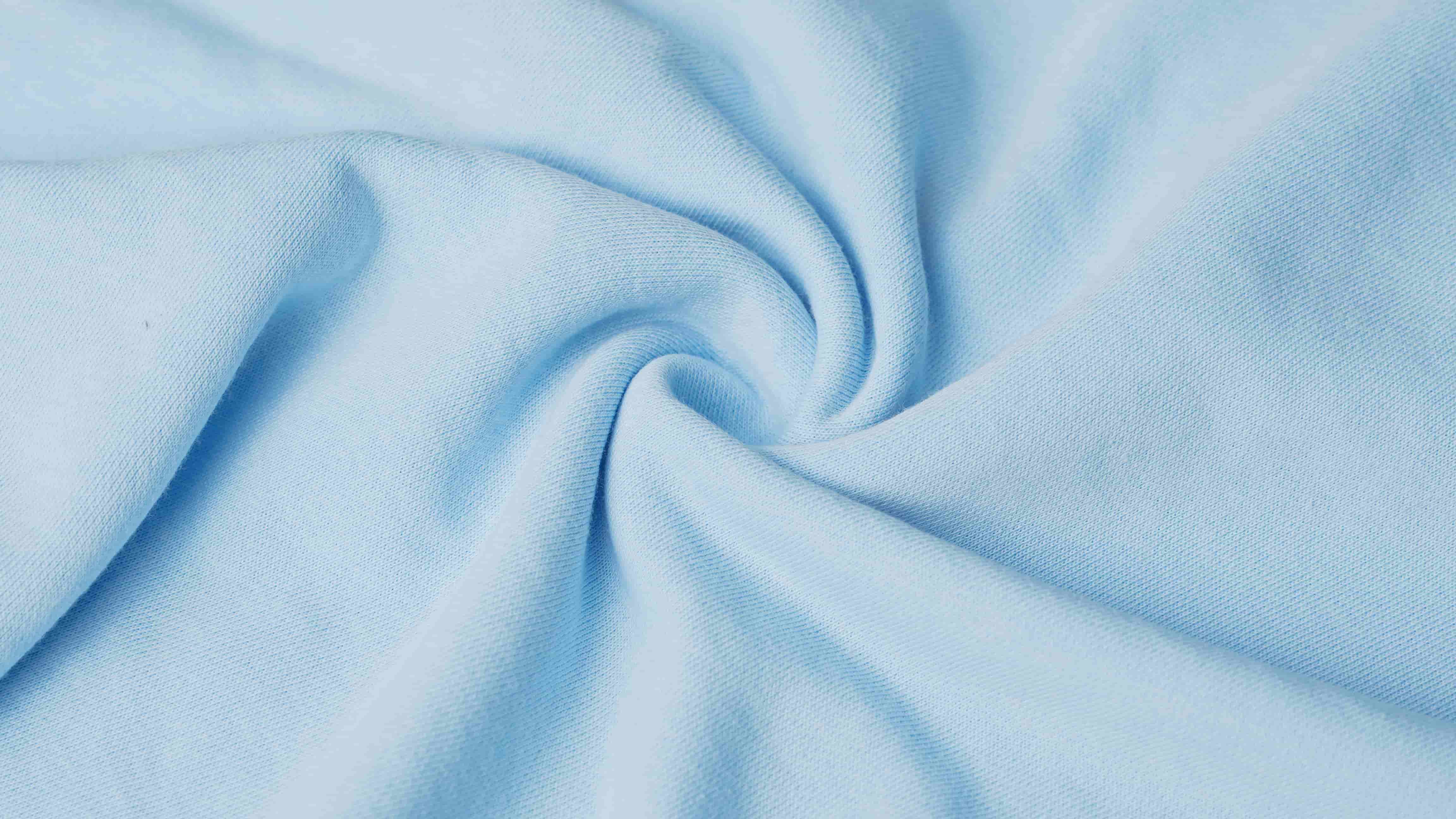
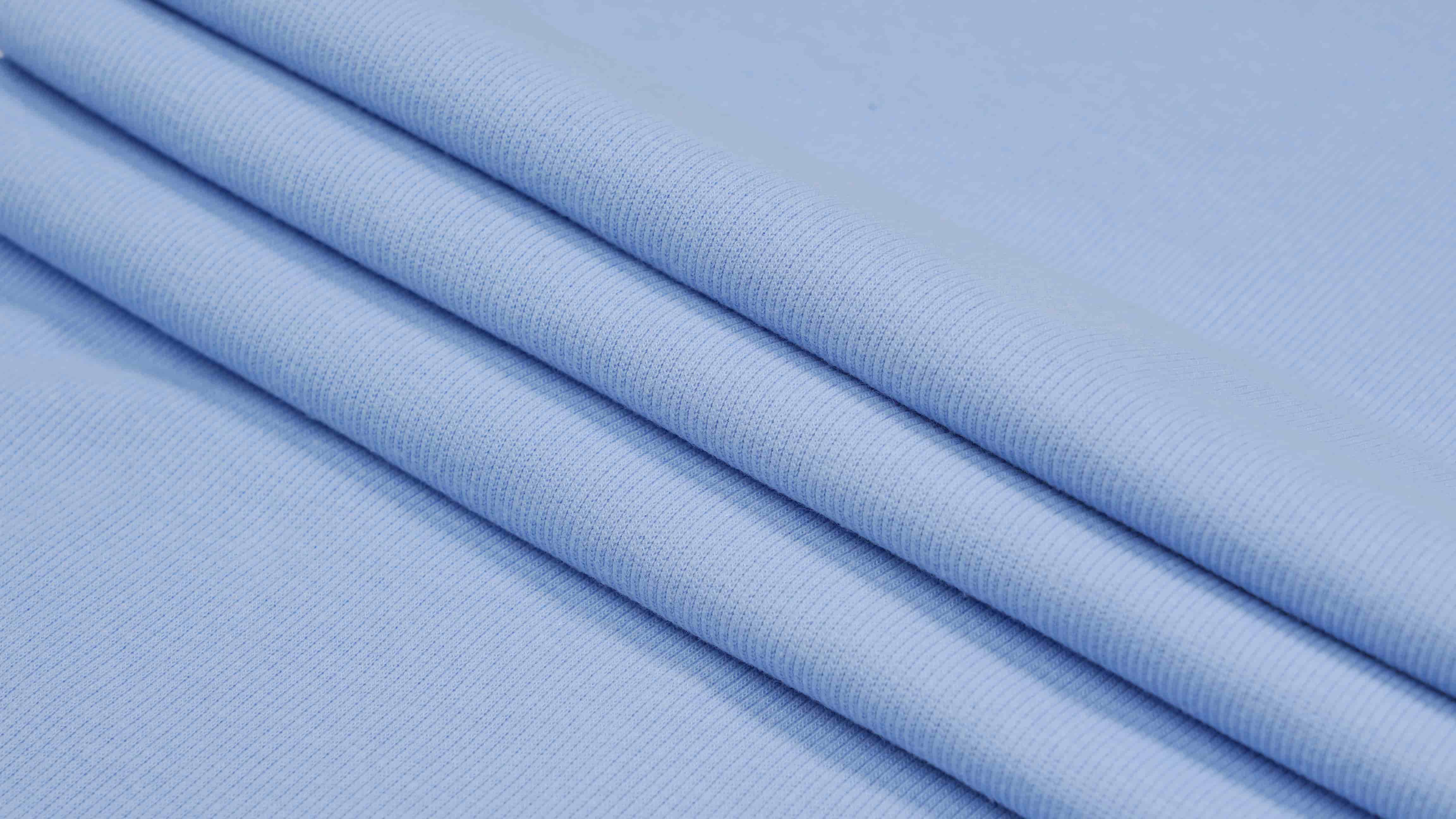
Yes, but the performance of cotton knit fabric depends heavily on its construction and moisture-management properties. Conventional cotton knit fabric primarily absorbs sweat, which can increase fabric weight and slow drying during intense exercise. Airflow Sports Cotton Knit Fabric uses a wrapped-yarn construction to help move moisture away from the skin while maintaining the soft, breathable feel associated with cotton. For sportswear designed for summer running, training, and gym workouts, this structure can provide a better balance of moisture management, airflow, and next-to-skin comfort.
Why Conventional Cotton Knit Fabric Can Trap Heat During Summer Workouts
Cotton is comfortable for everyday clothing, but conventional cotton knit fabric is not always optimized for high-sweat athletic use. Its ability to absorb moisture can become a limitation during intense exercise, particularly in hot and humid conditions. Understanding this difference starts with how cotton fibers interact with sweat and why Sports Cotton Knit Fabric requires more than cotton fiber content alone.
The Moisture Absorption Problem
Cotton fibers absorb moisture within their structure. Standard cotton typically has a moisture regain of around 6% to 9%, allowing a cotton knit fabric to hold a noticeable amount of sweat as exercise continues. As the fabric becomes wetter, it can feel heavier and remain in prolonged contact with the skin.
The issue is not moisture absorption alone, but how quickly the fabric can move and release that moisture. During running, cycling, or HIIT, sweat must reach the outer surface of the garment before it can evaporate effectively. When conventional cotton knit fabric retains moisture close to the body, drying can slow and the garment may feel increasingly damp.
This is why dry-fabric breathability does not always translate into the same level of comfort during intense exercise. Once the fabric becomes wet, moisture retention, fabric construction, garment fit, temperature, and humidity all influence how effectively heat and moisture can escape.
Fiber Swelling and Airflow Changes
When cotton fibers absorb water, they swell. In a knitted fabric, this can alter the spaces between fibers and yarns and affect air permeability. As moisture accumulates, the fabric may provide less effective airflow than it does in its dry state.
For sportswear manufacturers, this distinction is important: a Sports Cotton Knit Fabric that feels breathable during a dry-fabric test may behave differently after absorbing sweat. Moisture management therefore needs to be evaluated alongside air permeability and drying performance rather than judged by dry-state breathability alone.
The moisture cycle can be summarized simply:
- Sweat enters the cotton fibers
- The fibers swell as moisture accumulates
- Moisture movement and airflow can become less effective
- Drying slows as the fabric remains wet
- The garment may feel warmer and heavier during continued exercise
For light activity or moderate conditions, this may be acceptable. For summer running, training wear, and other high-sweat applications, fabric construction becomes more important because moisture management directly affects wearing comfort and thermal perception.
How Cotton Knit Fabric Behaves When Wet
| Fabric Type | Moisture Behavior | Dry-State Airflow | Wet-State Airflow | Drying Speed | Wet Skin Feel |
|---|---|---|---|---|---|
| Conventional cotton knit fabric | Absorbs and retains moisture | Generally high | May decrease as moisture accumulates | Slow to moderate | Damp, heavier |
| Airflow Sports Cotton Knit Fabric | Cotton surface with filament-assisted moisture transport | High | Designed to maintain airflow | Moderate | Less cling |
| 100% polyester knit | Low moisture regain | Varies by construction | Varies by construction | Generally fast | Drier, more synthetic feel |
| Cotton/polyester blend | Intermediate moisture behavior | Varies by blend and construction | Varies by construction | Moderate to fast | Depends on composition |
The comparison highlights an important point for sportswear development: cotton, polyester, and blended fabrics do not perform according to fiber content alone. Yarn construction, knit structure, fabric weight, finishing, and moisture-management design can all change the final result. Airflow Sports Cotton Knit Fabric is positioned as a performance-oriented cotton knit option for brands seeking a balance between cotton comfort and improved moisture transport.
How Engineered Cotton Knit Fabric Changes the Equation
Improving cotton knit fabric for sportswear does not necessarily require replacing cotton. The performance can also be influenced by how the yarn is engineered. Airflow Sports Cotton Knit Fabric uses a wrapped-yarn construction designed to combine cotton’s next-to-skin comfort with a filament-assisted approach to moisture transport and fabric stability.
Wrapped-Yarn Construction Explained
In a conventional cotton knit fabric, the yarn is primarily composed of twisted cotton fibers. The same fiber structure provides the fabric’s softness and absorbs moisture during wear. When sweat accumulates faster than it can evaporate, the fabric can become progressively wetter and heavier.
Airflow Sports Cotton Knit Fabric uses a wrapped-yarn structure in which long-staple cotton surrounds a continuous nylon filament. Rather than relying only on a conventional cotton yarn or a simple cotton-polyester blend, the construction places different materials within the same yarn architecture.
This creates distinct functions within the yarn:
- The cotton outer layer provides a soft surface and the familiar hand feel associated with cotton.
- The continuous filament supports moisture movement through the yarn structure.
- The combined construction contributes to yarn strength and dimensional stability during wear.
For sportswear manufacturers, the value of this construction is that moisture transport becomes a function of yarn architecture rather than depending solely on the natural absorption behavior of cotton or a topical finishing treatment. The actual wicking and drying performance should still be verified through fabric testing.
Why Long-Staple Cotton Matters
Cotton fiber length affects yarn quality and surface characteristics. Longer fibers can produce smoother, more uniform yarns with fewer exposed fiber ends, which can contribute to a softer hand feel and better resistance to surface fuzz and pilling when the yarn and fabric are properly engineered.
One important distinction for buyers is that terms such as 50s, 60s, and 80s generally refer to yarn count rather than directly indicating cotton staple length. The appropriate yarn count depends on the required fabric weight, coverage, softness, strength, and end use.
For summer sportswear, a finer cotton yarn can contribute to a lighter and smoother fabric, but yarn count should not be evaluated in isolation. Knit structure, GSM, fiber quality, finishing, and garment construction also affect the final wearing experience.
The Nylon Filament Core and Moisture Transport
The continuous nylon filament plays a different role from the surrounding cotton fibers. Its smooth, continuous structure can support capillary moisture movement within the yarn, helping liquid spread toward the outer surface where it can evaporate more readily under suitable environmental conditions.
This distinction is important when comparing conventional cotton knit fabric with a wrapped-yarn construction. Conventional cotton relies heavily on fiber absorption, while an engineered yarn can combine cotton comfort with a separate pathway designed to support moisture transport.
The result is not simply a change in fiber composition. It is a change in yarn architecture. For performance cotton knit fabric, this distinction can be evaluated through measurable properties such as vertical wicking, drying rate, air permeability, fabric weight, and dimensional stability after washing.
The Science of Sweat Wicking and Evaporative Cooling in Sports Cotton Knit Fabric
Understanding sports cotton knit fabric requires separating two related but different processes: moisture absorption and moisture evaporation. Absorbing sweat can make a fabric wet, but cooling depends on whether that moisture can ultimately evaporate into the surrounding air.
Liquid Transport vs. Vapor Release
Absorption refers to liquid moisture entering or being retained by fibers, while evaporation occurs when liquid water changes into vapor and leaves the fabric. For sportswear, effective moisture management therefore depends on more than how much sweat a fabric can absorb. The fabric also needs to move moisture toward a surface where evaporation can occur.
Airflow Sports Cotton Knit Fabric is designed to support this process through its wrapped-yarn construction. Moisture can move away from the skin through the yarn structure and spread toward the outer surface. Once moisture is distributed across a larger area, it has more opportunity to evaporate, depending on airflow, temperature, and ambient humidity.
This creates a three-stage moisture-management process:
- Liquid sweat moves away from the skin through the yarn structure.
- Moisture spreads across the outer fabric surface.
- Air movement helps carry water vapor away from the garment.
The performance of each stage depends on the fabric’s overall construction. Yarn architecture, knit structure, fabric weight, air permeability, and environmental conditions all influence the final drying and cooling effect. This is why wicking performance should be evaluated through fabric testing rather than inferred from fiber content alone.
Thermal Conductivity and Subjective Cooling
Thermal comfort is also influenced by how a fabric feels against the skin. A smooth, dry, or cool-feeling surface can improve initial wearing comfort, although subjective cooling should not be confused with a direct reduction in core body temperature.
In Airflow Sports Cotton Knit Fabric, the continuous nylon filament contributes to the yarn’s moisture-transport structure and may also influence the fabric’s surface and thermal feel. The actual cool-touch effect depends on yarn construction, fabric weight, surface characteristics, moisture content, and finishing.
For sportswear development, this distinction matters. A fabric can improve perceived comfort without directly controlling body temperature. Therefore, cooling claims should ideally be supported by appropriate fabric or wearer testing rather than based only on the presence of nylon.
Breathability Under Wet Conditions
Breathability is another factor in moisture management because air movement helps moisture vapor leave the garment. However, wet-state air permeability can differ significantly from dry-state performance, making it important to evaluate the fabric under both conditions when developing summer sportswear.
The wrapped-yarn structure used in Airflow Sports Cotton Knit Fabric is designed to maintain yarn stability while supporting moisture transport. Whether it provides higher wet-state air permeability than a conventional cotton knit fabric should be confirmed through comparative testing under the same fabric weight, knit structure, and test conditions.
This is also why cotton-polyester blends should not be judged by fiber ratio alone. A 60/40 blend may dry differently from 100% cotton, but its moisture management still depends on yarn construction, knit structure, finishing, and fabric specifications. For buyers comparing performance knit fabrics, test data provides a more reliable basis for evaluating wicking, drying rate, air permeability, and thermal comfort.
Performance Comparison: Sports Cotton Knit Fabric vs. Other Summer Textiles
Choosing a fabric for summer sportswear involves trade-offs. No single textile performs best across every metric. The goal is to match the fabric’s strengths to the needs of the garment and its intended use.
| Performance Metric | Airflow Sports Cotton Knit Fabric | 100% Cotton Knit Fabric | 100% Polyester Knit | Bamboo Viscose Knit |
|---|---|---|---|---|
| Moisture management | Filament-assisted transport | Primarily absorption | Generally fast transport | Moderate to good |
| Wet-state breathability | Designed to maintain airflow | May decrease when wet | Varies by construction | Varies by construction |
| Initial hand feel | Soft, cotton-like | Soft and natural | Varies | Soft and smooth |
| Skin comfort | High | High when dry | Moderate to high | High |
| Shape retention | High | Moderate | Generally high | Moderate |
| Drying speed | Moderate to fast | Generally slow | Generally fast | Moderate |
| Pilling resistance | Depends on construction | Depends on fiber and finishing | Generally good | Depends on construction |
The comparison shows why Airflow Sports Cotton Knit Fabric is not intended as a universal replacement for polyester. Polyester remains a strong option when rapid drying and moisture transport are the main priorities. For athletes and brands that place greater value on cotton’s natural hand feel, breathability, and next-to-skin comfort, an engineered cotton knit fabric offers another performance option.
From a product development perspective, the right choice depends on the garment’s intended use. A summer running shirt may prioritize fast moisture transport and drying, while a training top or lifestyle-oriented sports shirt may place greater emphasis on softness and comfort. Airflow Sports Cotton Knit Fabric is designed for applications where brands want to combine a cotton-rich feel with engineered moisture-management performance.
The key is to compare the actual fabric construction and test results rather than relying on fiber content alone. Wicking, drying rate, air permeability, fabric weight, and dimensional stability can all vary between fabrics, even when they contain similar fibers.
Real-World Scenarios Where Cotton Knit Fabric Can Reduce Overheating
Fabric performance becomes more meaningful when applied to specific conditions. Three scenarios illustrate where the difference between conventional and engineered cotton knit fabric can become noticeable.
Distance Running in Humid Conditions
High humidity can slow evaporative cooling by limiting how quickly moisture leaves the fabric. In these conditions, moving liquid moisture away from the skin becomes increasingly important. Conventional cotton knit fabric can retain more moisture as a run continues, causing the garment to feel heavier, wetter, and more clingy.
Airflow Sports Cotton Knit Fabric is designed to move moisture toward the outer surface, where it can spread and evaporate more effectively when conditions allow. The runner may therefore experience a drier and more comfortable feel for longer, although actual performance depends on fabric construction, weather, and exercise intensity.
For runners training through hot summer conditions, these differences can affect wearing comfort during longer sessions. This makes moisture management an important consideration when selecting cotton knit fabric for running apparel.
Outdoor Team Sports and Training Camps
Football, soccer, and field hockey players often wear multiple layers. A conventional cotton knit base layer can absorb and retain sweat close to the skin during extended training sessions. A wrapped-yarn construction is designed to move moisture toward the outer surface, where it has more opportunity to evaporate.
For athletes completing multiple training sessions, moisture management can also influence comfort between and during sessions. Keeping the fabric from remaining excessively wet may help reduce discomfort from prolonged dampness and friction while maintaining the soft hand feel associated with cotton knit fabric.
Gym-Based HIIT and Cross-Training
Indoor summer workouts can combine high sweat levels with limited airflow. In these conditions, moisture management and shape retention become important alongside breathability. The nylon filament in Airflow Sports Cotton Knit Fabric contributes to the yarn structure and can support moisture transport during dynamic movements.
For exercises such as burpees, kettlebell swings, and box jumps, fabric stability also affects fit and comfort. An engineered cotton knit fabric can be considered when brands want a sports shirt or training top that combines cotton comfort with greater structural stability.
Sourcing Checklist for Sports Cotton Knit Fabric
When selecting Sports Cotton Knit Fabric for a summer sportswear line, fiber content is only one part of the specification. Fabrics with similar fiber compositions can perform differently because of yarn construction, knit structure, fabric weight, and finishing.
Yarn Construction
Look for wrapped-yarn or core-sheath structures when moisture transport is a key requirement. The supplier should clearly explain the yarn architecture, including the materials used and their position within the yarn.
Ask your Sports Cotton Knit Fabric supplier for technical details and supporting performance data. This provides a more reliable basis for evaluating moisture-management claims.
Fiber Quality
Longer cotton fibers can contribute to smoother and more uniform yarns, but yarn count should be considered separately from staple length. Terms such as 50s, 60s, and 80s generally describe yarn count rather than directly indicating cotton staple length.
For sportswear applications, yarn count should match the required softness, fabric weight, coverage, strength, and end use. Fiber quality and yarn construction should therefore be evaluated together.
Knit Structure and Weight
Double-knit structures can provide greater stability than single jersey, although performance depends on the specific construction. Fabric weight should match the application: lighter fabrics may support airflow and reduce garment weight, while heavier fabrics can provide greater structure and coverage.
Certifications and Testing
OEKO-TEX Standard 100 can provide useful information about tested substances in the finished textile, but certification should be considered alongside actual fabric performance.
Ask the supplier for moisture-management data, including wicking rate, drying time, and air permeability where relevant. Comparing results under consistent conditions gives buyers a more reliable basis for evaluating performance cotton knit fabric than marketing claims alone.
Conclusion
Conventional cotton knit fabric can retain moisture during high-sweat summer workouts, but the issue is not cotton itself—it is fabric construction.
Airflow Sports Cotton Knit Fabric uses a wrapped-yarn structure with a nylon filament to support moisture transport while maintaining a soft, cotton-rich feel. It suits running apparel, team sportswear, and training tops.
For brands evaluating performance cotton knit fabric, request a sample and compare wicking, drying, and air permeability with your current fabric under actual application conditions.