Abstract
Fabric selection directly affects product performance, customer satisfaction, and manufacturing efficiency in apparel development. Choosing the wrong blend for a seasonal collection can lead to issues such as poor comfort, reduced durability, and unnecessary returns. For procurement teams and product developers, understanding how blended knit fabric performs across different climates and applications is essential for making reliable sourcing decisions.
This guide explains how to evaluate blended knit fabrics through four key factors: fiber composition, performance characteristics, seasonal suitability, and supplier qualification standards. From lightweight jersey for summer activewear to fleece-back constructions for winter garments, it provides practical insights to help buyers select suitable fabrics, reduce development risks, and improve sourcing efficiency.
1. What Is Blended Knit Fabric? Core Composition & Construction Principles
1.1 Fiber Composition and Blending Purpose
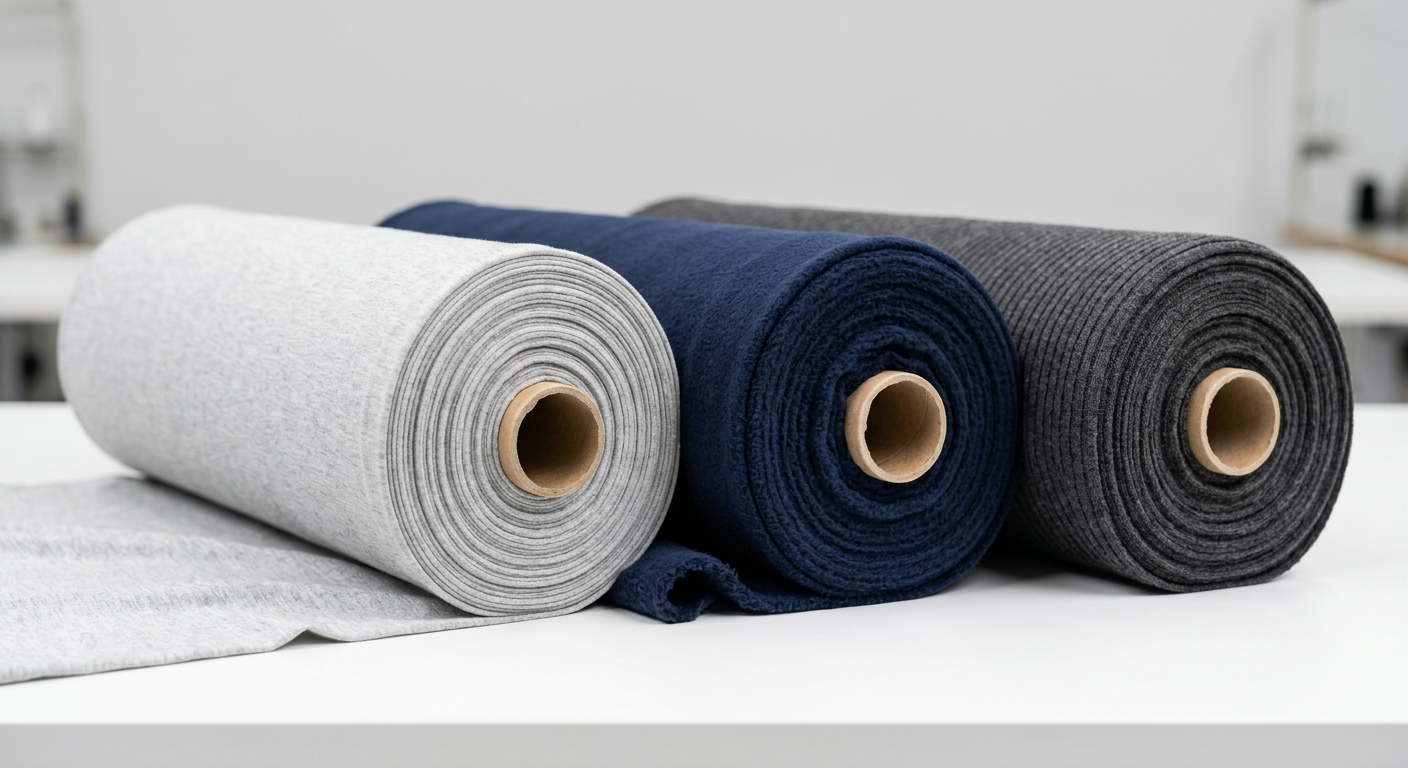
Blended knit fabric is created by combining two or more fibers — commonly cotton, polyester, spandex (elastane), rayon, modal, or acrylic — to achieve performance characteristics that a single fiber cannot provide on its own. Each fiber contributes specific advantages:
- Cotton provides natural softness, breathability, and moisture absorption, making it widely used in warm-season apparel. However, it has limited stretch recovery and may experience higher shrinkage without proper finishing.
- Polyester improves dimensional stability, abrasion resistance, and moisture management, especially when combined with functional finishes. It is also widely selected for cost-efficient large-scale production.
- Spandex (elastane), even at 3–8% content, significantly enhances stretch recovery and shape retention, making it suitable for activewear, fitted garments, and performance clothing.
- Rayon and modal add a smoother hand feel, better drape, and enhanced comfort for premium casualwear, loungewear, and skin-contact products.
- Acrylic provides lightweight insulation and wool-like warmth, making it a practical option for cold-weather knitwear.
The fiber ratio directly influences the final fabric performance. For example, a 60% cotton / 35% polyester / 5% spandex blend offers a balanced combination of comfort, durability, and stretch for T-shirts and casual sportswear. A 70% polyester / 25% cotton / 5% spandex construction emphasizes moisture control and abrasion resistance, making it more suitable for performance-oriented apparel.
1.2 Common Knit Structure Types
Fiber composition alone does not determine fabric performance. Knit construction also affects stretch, stability, thickness, and thermal behavior.
- Single Jersey: A lightweight single-layer construction with good horizontal stretch and moderate recovery. Commonly used for summer T-shirts, basic tops, and lightweight apparel. Typical GSM: 130–180.
- Interlock: A double-knit structure with similar surfaces on both sides. It provides better stability, reduced edge curling, and a heavier hand feel than single jersey. Suitable for polo shirts, casualwear, and mid-weight garments. Typical GSM: 180–250.
- Rib Knit: A structure formed by alternating knit and purl columns, offering excellent elasticity and recovery. Common applications include cuffs, collars, fitted garments, and stretch-focused apparel.
- Fleece-Back (French Terry / Brushed Fleece): A heavier construction featuring looped or brushed inner surfaces that improve warmth retention by trapping air. Commonly used for hoodies, sweatshirts, and winter base layers. Typical GSM: 250–380+.
For sourcing decisions, fiber composition and knit structure must be evaluated together. A polyester-rich single jersey and a cotton-rich fleece fabric with the same GSM can deliver completely different levels of comfort, durability, and seasonal performance.
2. Key Performance Parameters: What Procurement Teams Should Evaluate
2.1 Mechanical Performance and Comfort Properties
When sourcing blended knit fabric, procurement teams should request measurable performance data rather than relying only on fiber composition or supplier descriptions. Key evaluation parameters include:
- Stretch and Recovery Rate: Measures fabric elongation under tension and its ability to return to its original shape after release. For activewear applications, fabrics typically require high stretch performance with minimal permanent deformation after repeated washing.
- GSM (Grams per Square Meter): Indicates fabric weight and directly influences thickness, comfort, and seasonal suitability. Lightweight fabrics (130–180 GSM) are suitable for summer apparel, mid-weight fabrics (180–260 GSM) work well for transitional clothing, and heavyweight fabrics (260 GSM+) are commonly used for winter garments and fleece constructions.
- Tensile Strength: Tested according to standards such as ISO 13934-1, tensile strength data helps verify fabric durability under repeated wear and mechanical stress. Suppliers should provide technical data sheets with relevant strength test results.
- Pilling Resistance: Evaluated through standards including ASTM D3512 and ISO 12945-2. For premium apparel applications, fabrics should generally achieve acceptable pilling ratings to maintain surface appearance after extended use.
- Dimensional Stability: Measures shrinkage and shape retention after washing. For most apparel applications, shrinkage within approximately ±3% after repeated washing is considered acceptable.
2.2 Breathability and Moisture Management
Breathability and moisture control are determined by both fiber characteristics and knit structure. These factors are especially important for activewear, base layers, and seasonal apparel.
Key performance indicators include:
- Air Permeability: Measures the volume of air passing through the fabric. Higher air permeability generally improves ventilation, making it important for warm-weather clothing and sportswear.
- Moisture Vapor Transmission Rate (MVTR): Evaluates how effectively moisture vapor moves through the fabric. High-performance activewear fabrics typically require strong moisture transfer capability to improve wearing comfort during physical activity.
- Moisture Wicking Speed: Measures how quickly liquid spreads across and moves through the fabric surface. Polyester-based blends with hydrophilic finishes often provide faster moisture transport than untreated cotton fabrics.
For summer apparel, manufacturers should prioritize lightweight constructions with good airflow and moisture release. For winter base layers, moisture management is equally important, as fabrics that trap sweat close to the skin can reduce comfort and affect thermal performance during extended wear.
Blended Knit Fabric Type Comparison by Season & Application
| Fabric Type | Fiber Composition | GSM Range | Stretch Level | Breathability | Ideal Season | Typical End-Use |
|---|---|---|---|---|---|---|
| Cotton/Poly Jersey | 60%C / 35%P / 5%SP | 150–200 gsm | High | Medium-High | Spring & Summer | T-shirts, Casual Tops |
| Modal/Spandex Jersey | 90%Modal / 10%SP | 160–210 gsm | High | High | Spring & Summer | Loungewear, Yoga Wear |
| Performance Poly Jersey | 85%P / 15%SP | 140–180 gsm | Very High | High (treated) | Year-Round | Activewear, Compression |
| Cotton/Poly Interlock | 50%C / 45%P / 5%SP | 200–260 gsm | Medium | Medium | Transitional | Polo Shirts, Bodywear |
| Poly/Cotton Fleece | 65%P / 30%C / 5%SP | 280–360 gsm | Medium | Low-Medium | Autumn & Winter | Hoodies, Sweatshirts |
| Acrylic/Wool Rib | 70%AC / 30%W | 250–320 gsm | Medium-High | Low | Winter | Knitwear, Base Layers |
3. Seasonal Selection Guide: Matching Blended Knit Fabric to End-Use Requirements
3.1 Warm-Season Fabrics: Breathability & Lightweight Priority
For spring and summer apparel, choosing the right blended knit fabric requires balancing lightweight construction, breathability, and moisture management. Fabrics with lower thermal resistance and open knit structures generally provide better comfort in warm climates.
Recommended options include:
- High-cotton blends (60–80% cotton) combined with polyester and a small amount of spandex are suitable for everyday T-shirts, casual dresses, and lightweight tops. A GSM range of 150–180 is commonly preferred for warm-season products.
- Modal or bamboo-blended jerseys are ideal for premium loungewear and intimate apparel due to their soft hand feel, smooth surface, and enhanced moisture absorption.
- Polyester-dominant performance blends with hydrophilic finishes are widely used in activewear because they improve sweat transport while maintaining durability during high-movement activities.
Manufacturers should avoid heavy interlock or brushed constructions for summer applications. Fabric density and GSM often have a greater impact on heat retention than fiber type alone.
3.2 Cold-Season Fabrics: Thermal Retention & Durability Priority
For autumn and winter collections, a suitable blended knit fabric should provide thermal insulation, abrasion resistance, and dimensional stability after repeated washing.
Common choices include:
- Fleece-back constructions (French terry and brushed fleece) with 65–80% polyester content provide effective warmth at a competitive cost. The brushed inner surface increases fabric loft and improves heat retention. Typical GSM ranges from 280–380.
- Acrylic/wool or acrylic/polyester rib knits offer a good warmth-to-weight ratio for knitwear and fitted base layers. Acrylic improves durability and reduces moisture absorption compared with pure wool.
- Mid-heavy interlock fabrics (240–280 GSM) provide versatility for transitional clothing, structured casualwear, and layering garments.
For multi-layer clothing systems, manufacturers should also evaluate surface friction between fabrics. Excessive friction during wear can accelerate pilling and reduce garment lifespan.
4. Compliance Standards & Supplier Qualification Criteria
4.1 Applicable Testing & Certification Standards
For international apparel markets, buyers should require documented compliance information before selecting a blended knit fabric supplier.
Key standards include:
- OEKO-TEX® STANDARD 100: Verifies that finished textiles, including dyes and processing chemicals, meet safety requirements for harmful substances.
- REACH Regulation (EU): Requires suppliers to provide information regarding restricted chemical substances and SVHC compliance.
- ASTM D3512 / ISO 12945-2: Used to evaluate fabric pilling resistance. Higher grades indicate better surface durability.
- ISO 13934-1: Provides standardized testing methods for evaluating fabric tensile strength and structural performance.
- ISO 105-C06: Measures color fastness to washing, helping ensure stable appearance during garment use.
Including these requirements in RFQ documents helps buyers identify qualified suppliers and reduce quality risks before bulk production.
4.2 Supplier Evaluation Checklist
Beyond certifications, buyers should evaluate whether a blended knit fabric supplier can provide reliable production capability and technical support.
Important evaluation factors include:
- MOQ Flexibility: Confirm minimum quantities by color, construction, and customization requirements. Suppliers offering flexible MOQs are often more suitable for emerging brands and medium-volume projects.
- Dye Lot Consistency: Request color testing reports and confirm acceptable ΔE tolerance between production batches.
- Lead Time Control: Standard production usually requires 25–45 days, while customized blends and special finishes may require additional development time.
- Technical Documentation: Qualified suppliers should provide TDS documents covering fiber composition, GSM, construction details, shrinkage performance, and certifications.
- Sample Development Capability: Suppliers should support lab dips, fabric samples, and pre-production approvals before bulk manufacturing.
A reliable supplier should not only provide fabric but also support material selection, customization, testing, and long-term production consistency.
FAQ
Q1: What is the optimal cotton-polyester-spandex ratio for year-round blended knit fabric in activewear?
A 50% polyester / 42% cotton / 8% spandex blend provides a balanced combination of moisture control, comfort, and stretch recovery. Performance activewear may require higher polyester content with moisture-wicking finishes for enhanced durability.
Q2: How can I verify breathability and moisture-wicking performance before bulk production?
Request third-party test reports for air permeability, MVTR, and moisture management performance. Physical fabric samples and wash testing are also recommended before confirming large-scale production.
Q3: What certifications should a blended knit fabric supplier provide for EU or US markets?
Common requirements include OEKO-TEX® STANDARD 100, REACH compliance, and GOTS certification for organic claims. Buyers should also request relevant ASTM or ISO test reports for performance verification.
Q4: How do I choose the right blended knit fabric for different seasons?
Lightweight jersey fabrics are suitable for spring and summer due to better breathability, while fleece-back or heavier interlock fabrics provide improved warmth for autumn and winter applications.
Q5: Can blended knit fabric be customized for specific apparel products?
Yes. Suppliers can usually customize fiber ratios, GSM, knit structures, colors, finishes, and performance properties based on requirements for activewear, casualwear, loungewear, or other applications.
Q6: What should buyers evaluate when selecting a blended knit fabric supplier?
Buyers should review fabric quality, testing capability, certifications, MOQ flexibility, production capacity, and technical support to ensure consistent performance for long-term supply.
Conclusion
Selecting the right blended knit fabric requires careful evaluation of fiber composition, performance characteristics, seasonal suitability, and supplier reliability. A well-specified fabric can improve product quality, reduce sampling adjustments, minimize production risks, and help brands deliver better comfort and durability to end users.
For apparel manufacturers and sourcing teams, technical verification before bulk production is essential. Evaluating GSM, stretch recovery, breathability, certifications, and testing data helps ensure the selected fabric meets both market expectations and production requirements.
If you are developing new apparel collections or looking for a reliable blended knit fabric supplier, choosing a partner with strong customization capabilities, transparent technical documentation, and consistent quality control can make a significant difference. Request fabric samples based on your required specifications and discuss your project needs with our team to find the right solution for your next collection.